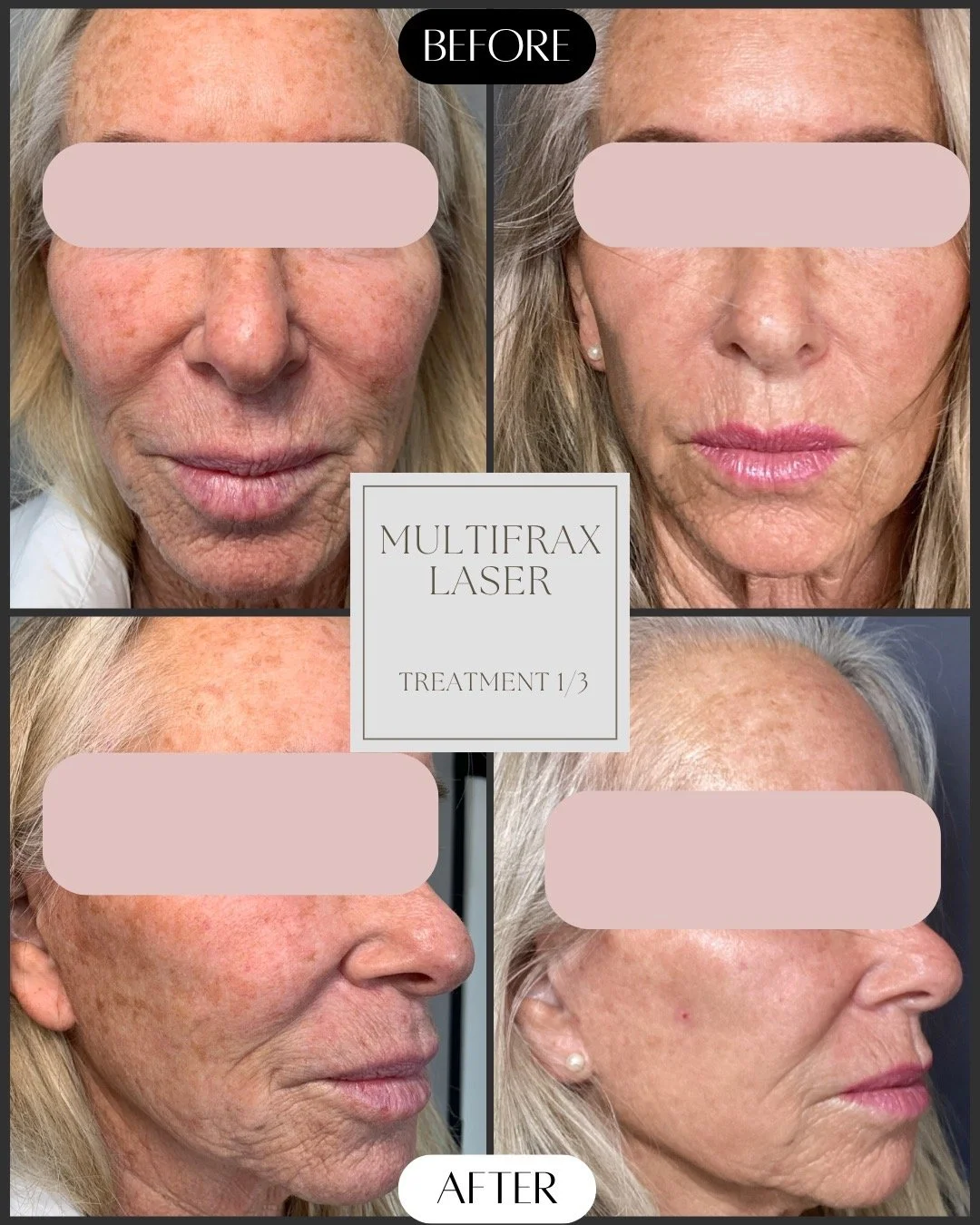
Multifrax
A multifractional, non-ablative dual-wavelength laser. This means it uses two different laser wavelengths to treat the skin without completely removing the top layer (ablative).
It delivers laser energy in a fractional pattern, creating tiny microscopic treatment zones while leaving surrounding skin intact. Dual Wavelengths: uses 1550nm and 1927nm wavelengths, each targeting different depths within the skin.
Fractional Technology: Minimizes downtime and side effects compared to traditional laser resurfacing.
Versatility: Can be used to treat a variety of skin concerns.
-
Key Mechanisms of Action
Fractional Photothermolysis:
Rather than stripping away the entire top layer of skin (which ablative lasers do), MultiFrax creates thousands of microscopic, targeted heat columns known as microthermal treatment zones (MTZs).
It leaves surrounding healthy tissue intact between these columns. These untouched "bridges" of skin trigger rapid wound healing, allowing the tissue to repair itself within days instead of weeks.
Non-Ablative Resurfacing:
It heats and coagulates targeted tissue below the skin's surface without vaporizing or removing the outer protective barrier (epidermis). This keeps skin recovery smooth and minimizes downtime.
Dual-Wavelength Capabilities:
1550 nm (Erbium Glass): Penetrates into the deeper dermis to stimulate collagen and elastin production. This targets structural issues like fine lines, acne scarring, skin laxity, and overall texture.
1927 nm (Thulium): Works superficially in the upper epidermal layer to break up surface pigment, dark spots, sun damage, and melasma.
SimulScan (Combined Mode): Fires both wavelengths together in a single pass to treat deep structural texture and superficial tone/pigment at the same time.
Stimulation of Neocollagenesis & Cell Turnover:
The microscopic thermal injuries prompt the body's natural repair mechanisms, accelerating cellular turnover to shed damaged pigment while signaling fibroblasts to build fresh, new collagen over the following weeks and months.
-
Comprehensive dual-layer treatment: Targets both deep structural collagen (1550 nm) and superficial epidermal pigment (1927 nm) in a single pass using SimulScan technology.
Pigmentation & sun damage reversal: Fades sun spots, age spots, freckles, and stubborn melasma while evening overall skin tone.
Texture & scar refinement: Smooths fine lines, tightens enlarged pores, and improves the appearance of acne scars, surgical scars, and stretch marks.
Safe for all skin tones: Non-ablative fractionated approach preserves the protective outer skin barrier, making it safe across diverse Fitzpatrick skin types with minimal risk of hyperpigmentation.
Minimal downtime & rapid recovery: Leaves healthy tissue bridges between microscopic laser columns to accelerate healing, allowing patients to resume normal activities within days.
-
The typical social downtime for MultiFrax is 3 to 5 days, though you can return to normal daily activities almost immediately.
Day-by-Day Recovery Timeline
Days 1–2 (The "Sunburn" Phase): The skin appears pink to bright red, feels warm, and may have mild swelling or tightness.
Days 3–5 (The "Sandpaper" & Shedding Phase): As new epidermal tissue forms, dead skin cells rise to the surface. Skin feels dry and rough like fine sandpaper, followed by light flaking/peeling as microscopic pigment and debris shed off.
Days 5–7: Peeling clears, revealing brighter, smoother skin with a subtle pink glow that gradually fades.
Essential Recovery Rules
First 24 hours: Keep skin hydrated with a gentle, bland moisturizer; avoid hot water, saunas, heavy sweating, and alcohol.
Days 1–7: No active ingredients (retinoids, AHAs/BHAs, vitamin C, or physical scrubs) until the skin is fully healed.
Sun protection: Strict daily SPF 30+ is mandatory to protect fresh skin and prevent post-treatment hyperpigmentation. Makeup can usually be applied by Day 3.
-
Common post-treatment reactions: Transient redness, moderate swelling (peaking at 24 to 48 hours), dryness, skin tightness, and a rough "sandpaper" texture during the shedding phase.
Post-Inflammatory Hyperpigmentation (PIH): Darkening of the skin, higher risk in darker skin tones (Fitzpatrick IV–VI) or if exposed to UV light/sun too early during recovery.
Cold sore / HSV reactivation: Laser heat can trigger viral herpes simplex flare-ups around the mouth (prophylactic antivirals are often prescribed prior to treatment).
Infection & acneiform breakouts: Rare bacterial/fungal infection or temporary breakouts (milia/acne) from heavy occlusive post-care ointments blocking pores.
Prolonged erythema & textural changes: Uncommonly, redness can persist beyond 10 to 14 days, or improper settings/post-care can lead to grid-line patterning, delayed healing, or scarring.